Myredient tells you what is actually in your food.
Scan a product barcode or photograph an ingredient label, and Myredient breaks down every additive and ingredient inside — filtered to the dietary preferences you set.

Two ways to scan
Scan a product barcode or photograph its ingredient list. Myredient reads the label and opens a result where you can review its ingredients and additives.
Regulated differently around the world
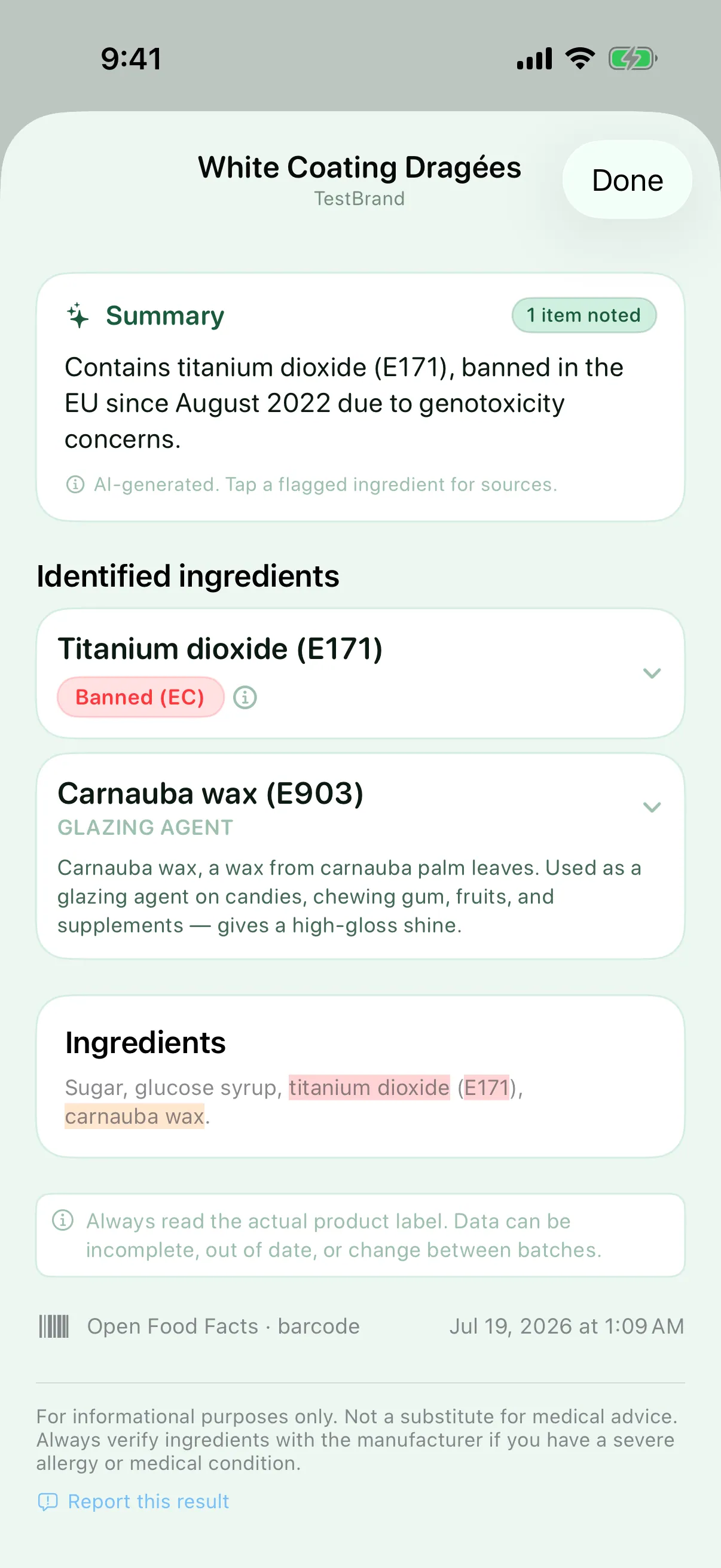
For each additive, Myredient shows how official regulators treat it — permitted, allowed only under specific conditions (a maximum level or a mandatory warning), or banned — across the United States, European Union, Canada, and Japan. Each status comes straight from the regulators' own registers: the EU additives register (Regulation 1333/2008), the US FDA's Substances Added to Food, Health Canada's permitted-additive lists, and Japan's MHLW lists. Every flag cites its source — you see the facts, not a score.
A verdict made for you
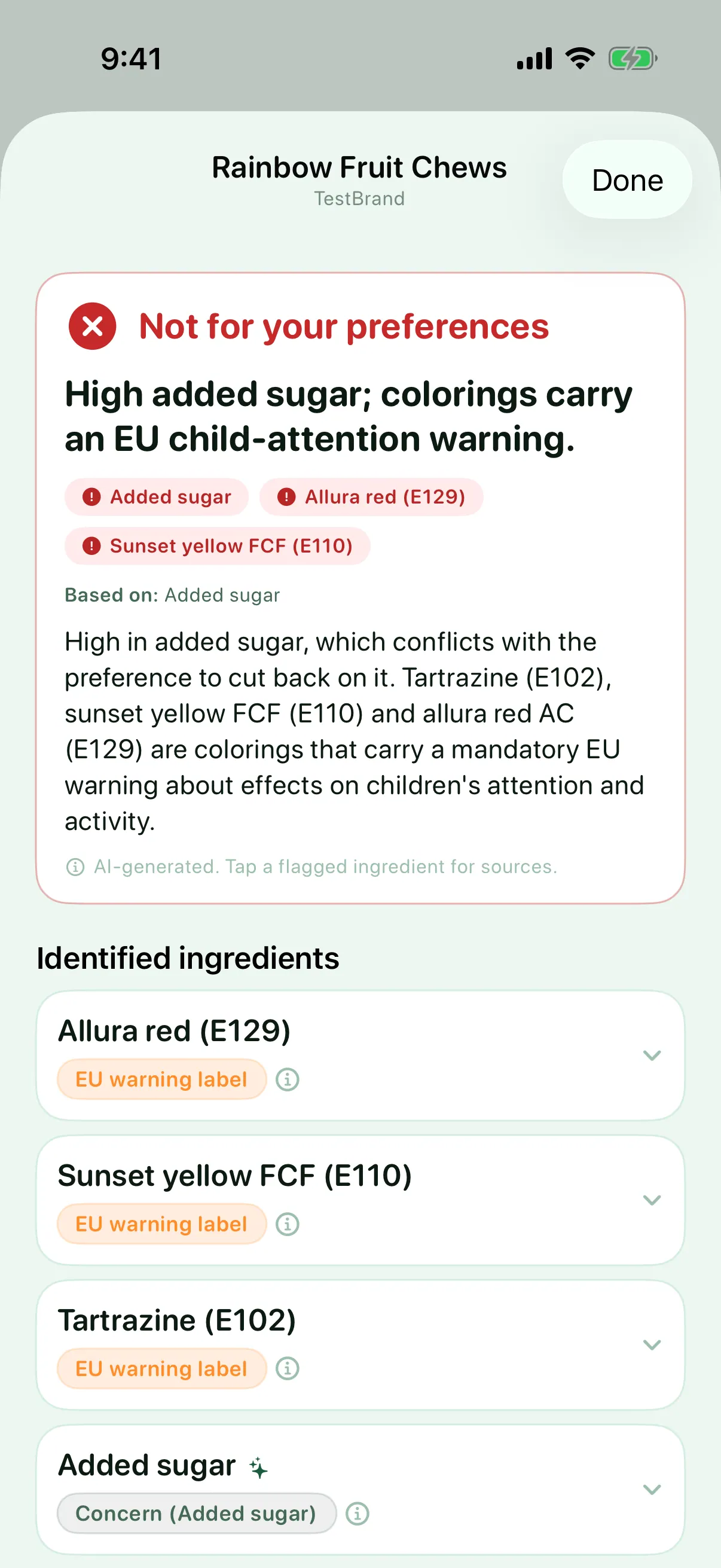
Set your dietary preferences once — vegan, vegetarian, palm-oil-free, added sugar, seed oils, and more — and every scan gives you a personalized verdict: a clear, at-a-glance read on how a product fits what you care about, instead of a wall of unfamiliar chemical names. Myredient points out what to look at; it does not certify that a product fits your diet.
Saved for later
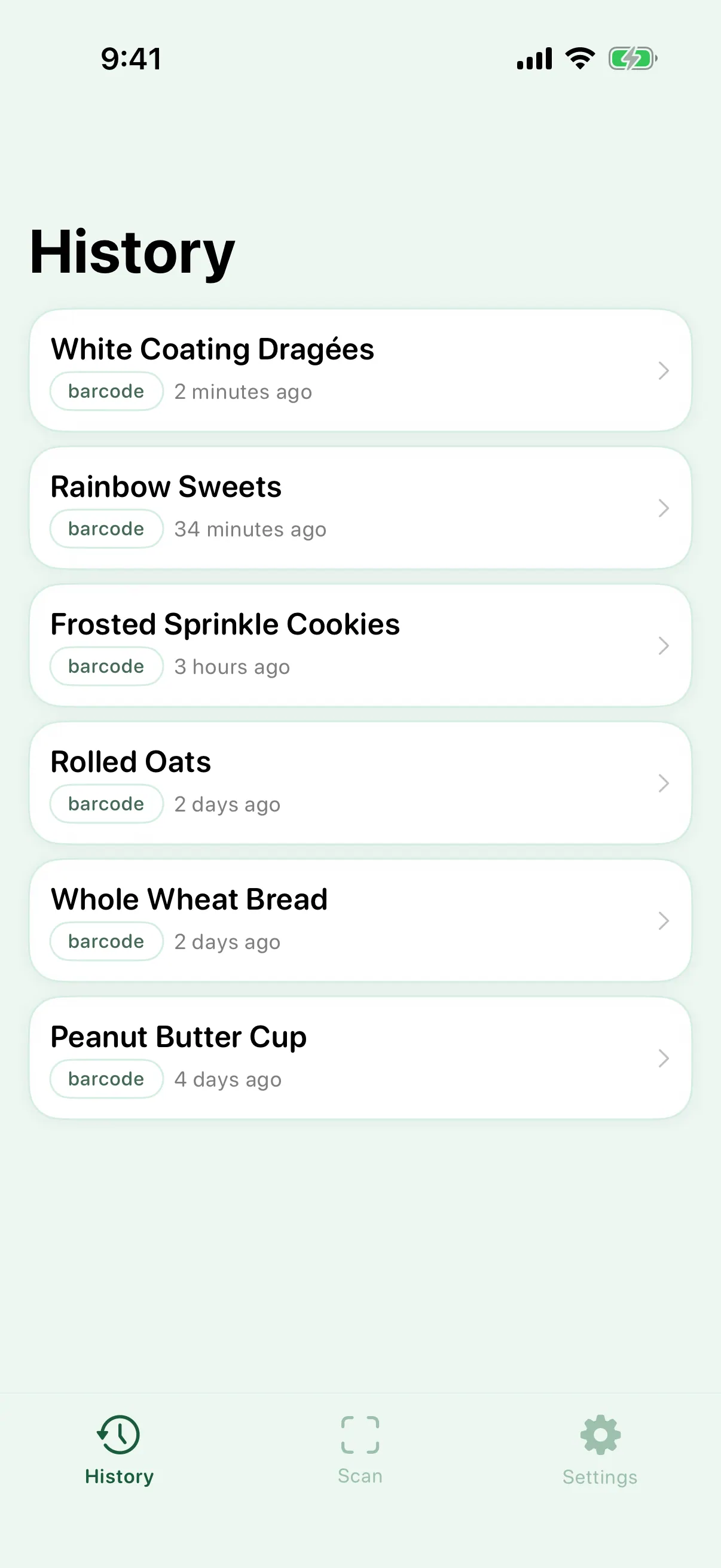
Every scan is kept in your history, so you can revisit a product or compare options without scanning again.
Ask a follow-up (Pro)
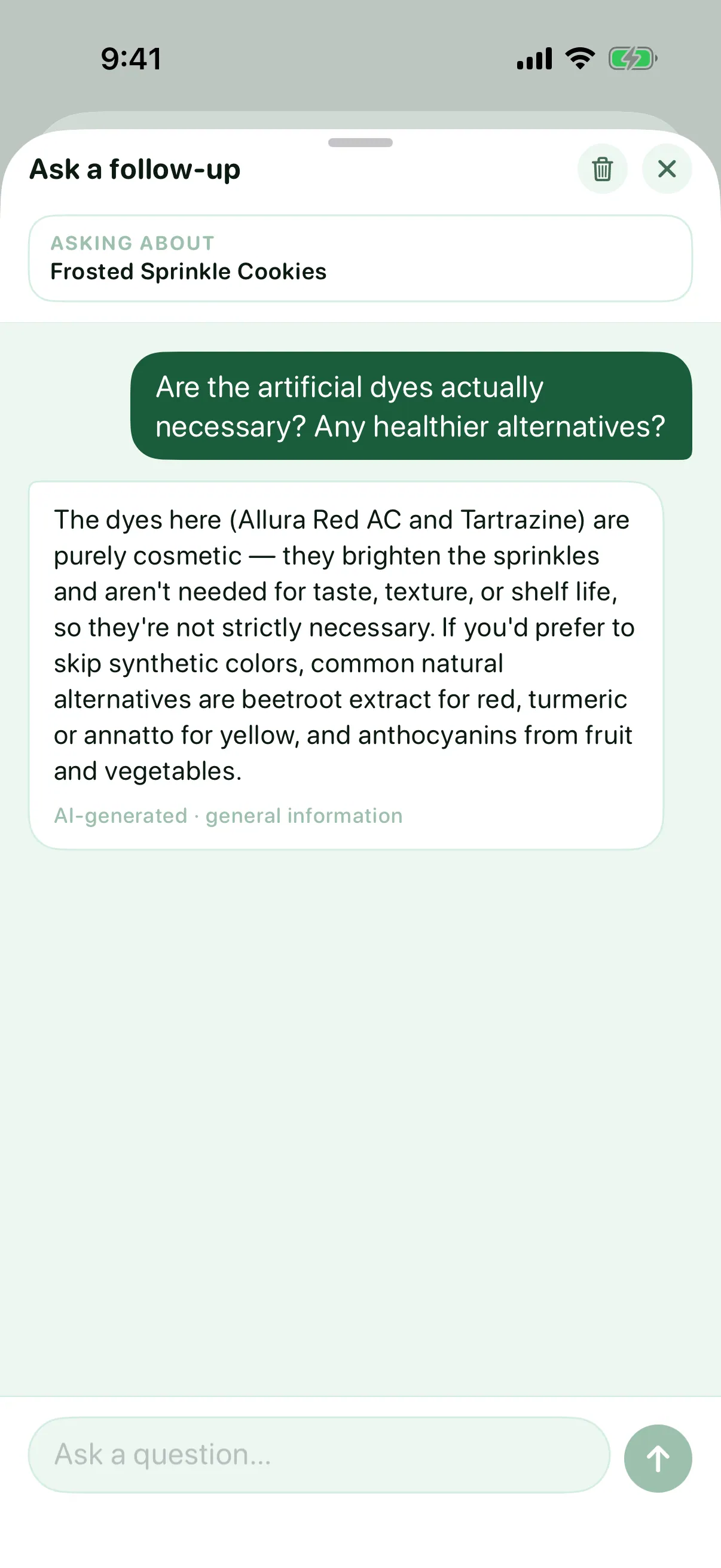
Have a question the scan doesn't cover? Open any result and ask in your own words — what an additive is, why it is used, how it fits a specific diet, or what cleaner alternatives exist. Answers are clearly labelled as AI-generated general information, not medical or regulatory advice.
Food additive guides
How to check additives on an ingredient label
Identify the additive name or E-number, understand why it is used, and check the regulator's current record instead of relying on a single unexplained score.
02What are E-numbers on food labels?
An E-number identifies a food additive in the European system. Learn what the code means, how E102 compares with its US name, and where to check current conditions of use.
03Why do food additive rules differ by country?
A food additive can have different legal status in the EU and US. Use titanium dioxide (E171) to see how assessments, permitted uses, and updates affect the answer.
Get the app
Myredient tells you what is actually in your food.